Sign In
  • Log In
  • Register

Lost Your Password?

Registration is disabled

Permaculture Tasmania
  • Home
  • About us
    • About us
    • Get in touch
    • AGM 2026
    • AGM
    • Meet the team
    • Member discounts
    • Newsletters
    • Life members
      • Our Lifetime Members
      • Life member profiles
      • Lifetime Membership Nomination
  • Find an event
    • Book club
    • Course
    • Festival
    • Get togethers
    • Market
    • Online event
    • Repair cafe
    • Seed / food swap
    • Workshop
  • Find connections
    • Permaculture groups
    • Organisations / businesses
      • Community garden
      • Community organisation
      • Crop / seed swap
      • Design service
      • Ecovillage
      • Food delivery
      • Free / trading
      • Markets
      • Repair cafe
      • Retailer
      • Seed suppliers
      • Social enterprise
      • Training
  • Blog
    • View all Blog posts
    • Bush foods
    • Book review
    • Design
    • Permablitz
    • Permaculture
    • Permie profile
    • Plants and gardens
    • Resources
    • Stories
    • Water
  • Join us
    • Join us
    • Member discounts
    • Join a local Facebook group
Permaculture Tasmania
  • Home
  • About us
    • About us
    • Get in touch
    • AGM 2026
    • AGM
    • Meet the team
    • Member discounts
    • Newsletters
    • Life members
      • Our Lifetime Members
      • Life member profiles
      • Lifetime Membership Nomination
  • Find an event
    • Book club
    • Course
    • Festival
    • Get togethers
    • Market
    • Online event
    • Repair cafe
    • Seed / food swap
    • Workshop
  • Find connections
    • Permaculture groups
    • Organisations / businesses
      • Community garden
      • Community organisation
      • Crop / seed swap
      • Design service
      • Ecovillage
      • Food delivery
      • Free / trading
      • Markets
      • Repair cafe
      • Retailer
      • Seed suppliers
      • Social enterprise
      • Training
  • Blog
    • View all Blog posts
    • Bush foods
    • Book review
    • Design
    • Permablitz
    • Permaculture
    • Permie profile
    • Plants and gardens
    • Resources
    • Stories
    • Water
  • Join us
    • Join us
    • Member discounts
    • Join a local Facebook group
Sign In Add Listing
Ethics and Principles

Ethics and Principles

  • By Russ Grayson
  • 18/09/202427/09/2025
  • Permaculture

Permaculture Ethics

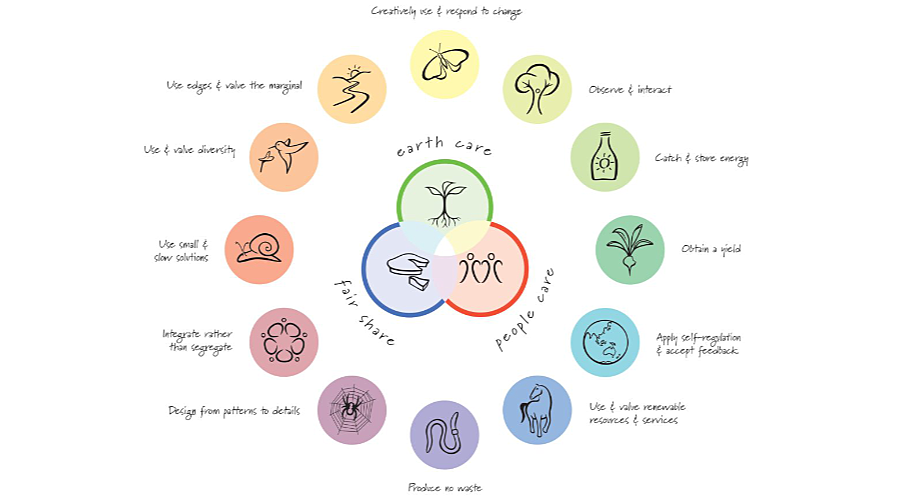
care of the earth | care of people | fair share

The ethics earth care, people care and fair share form the foundation for permaculture design and are also found in most traditional societies. Ethics are culturally evolved mechanisms that regulate self-interest, giving us a better understanding of good and bad outcomes. The greater the power of humans, the more critical ethics become for long-term cultural and biological survival.

Download Image above from Permaculture Principles website

Permaculture Principles

Abridged version of permaculture principles from permacultureprinciples.com, visit their website for more in-depth information.

Principle 1—observe and interact: By taking time to engage with nature we can design solutions that suit our particular situation.

Principle 2—catch and store energy: By developing systems that collect resources at peak abundance, we can use them in times of need.

Principle 3—obtain a yield: Ensure that you are getting truly useful rewards as part of the work that you are doing.

Principle 4—apply self-regulation and accept feedback: We need to discourage inappropriate activity to ensure that systems can continue to function well.

Principle 5—use and value renewable resources and services: Make the best use of nature’s abundance to reduce our consumptive behaviour and dependence on non-renewable resources.

Principle 6—produce no waste: By valuing and making use of all the resources that are available to us, nothing goes to waste.

Principle 7—design from patterns to details: By stepping back, we can observe patterns in nature and society. These can form the backbone of our designs, with the details filled in as we go.

Principle 8—integrate rather than segregate: By putting the right things in the right place, relationships develop between those things and they work together to support each other.

Principle 9—use small and slow solutions: Small and slow systems are easier to maintain than big ones, making better use of local resources and producing more sustainable outcomes.

Principle 10—use and value diversity: Diversity reduces vulnerability to a variety of threats and takes advantage of the unique nature of the environment in which it resides.

Principle 11—use edges and value the marginal: The interface between things is where the most interesting events take place. These are often the most valuable, diverse and productive elements in the system.

Principle 12—creatively use and respond to change: We can have a positive impact on inevitable change by carefully observing, and then intervening at the right time.

Post navigation

Previous Post Creating a perma-culture
Next Post A short and incomplete history of permaculture

Got Any Question?

If you are having any questions, please feel free to ask.

Send us an email

Share our blog post…

  • Share
  • Share
  • Pin It

Latest blog posts

  • Newsletter Spring 2026
    Member Newsletter — Spring 2026
    31/08/2026
  • Golden Scallopini
    Golden scallopini: a small, bright summer squash
    31/08/2026
  • Bird flu response
    Tasmanian Bird Flu Response
    31/08/2026
  • food regulations image
    When the community food movement meets the regulators
    31/08/2026
  • Favourite things Patrick
    My Favourite Things — Patrick Casey
    31/08/2026
  • Women Farmer Sri Lanka event
    Organic Women Farmers in Sri Lanka
    31/08/2026
  • Principe one with Loretta
    Permaculture principles for beginners — No. 5
    31/08/2026
  • job description image
    Committee members and volunteers needed
    31/08/2026

Permaculture Tasmania logo

Permaculture Tasmania Inc acknowledges with deep respect and gives gratitude to the traditional inhabitants of this land — for whom the waters of, and land around lutruwita offered sanctuary and great abundance.

We honour their continuing custodianship and extend deep respect to all Aboriginal Communities — who are living examples of resilience — having survived invasion, dispossession and now climate change.

As we move towards reconciliation, we will not forget their connection and their unbroken custodianship; and we pay respect to those elders who have passed, and those who today continue to care for Country.

Search our Blog

Helpful Links

  • Home
  • About us
  • Find an event
  • Permaculture groups
  • Member Login
  • Get in touch
  • Privacy Policy
  • Terms and conditions

Except where otherwise noted, content on this site is licensed under a Creative Commons Attribution-NonCommercial-ShareAlike 4.0 International License.

© 2026 Permaculture Tasmania Inc. — ABN: 48 146 919 973
Hi! Can I help you find an event?
AI Assistant
Expand chat Collapse chat
Start a new chat
Powered by PurioChat