Tasmanian Bird Flu Response
Story compiled by Loretta Leary, Secretary of Permaculture Tasmania — this information comes directly from Biosecurity Tasmania
What is bird flu?
Bird flu is a highly contagious viral disease of birds.
It can affect poultry farms, backyard poultry, and wild birds. It can cause disease in other animals, including mammals such as seals, and scavenging species.
Some bird species carry bird flu without symptoms or illness but birds and other animals sick with bird flu will likely die.
Due to wild bird movements, it is not possible to stop bird flu from spreading among wildlife and may result in large numbers of bird and mammal deaths.
Symptoms
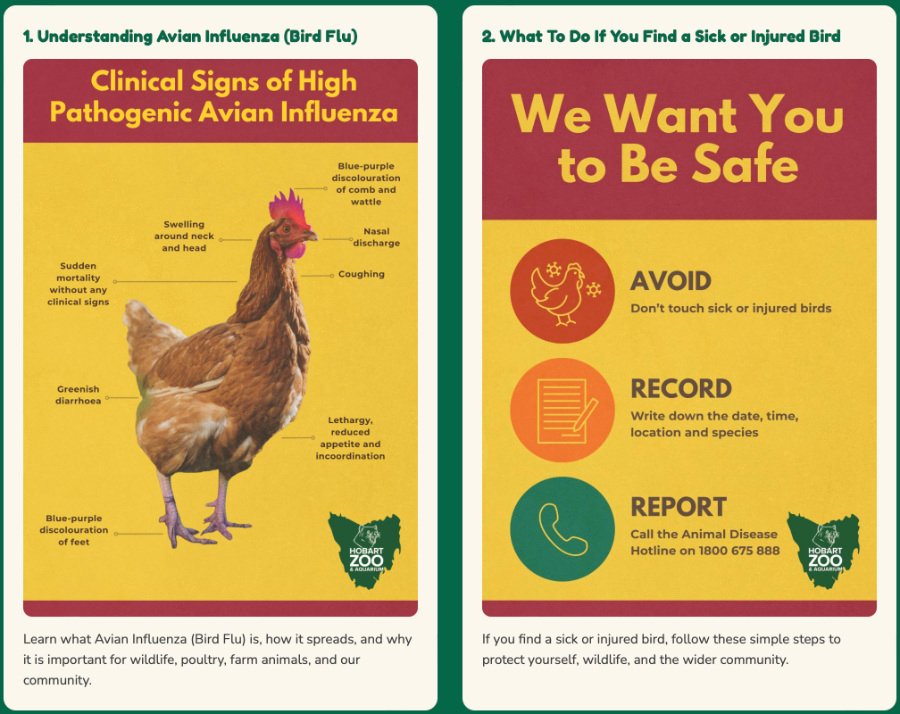
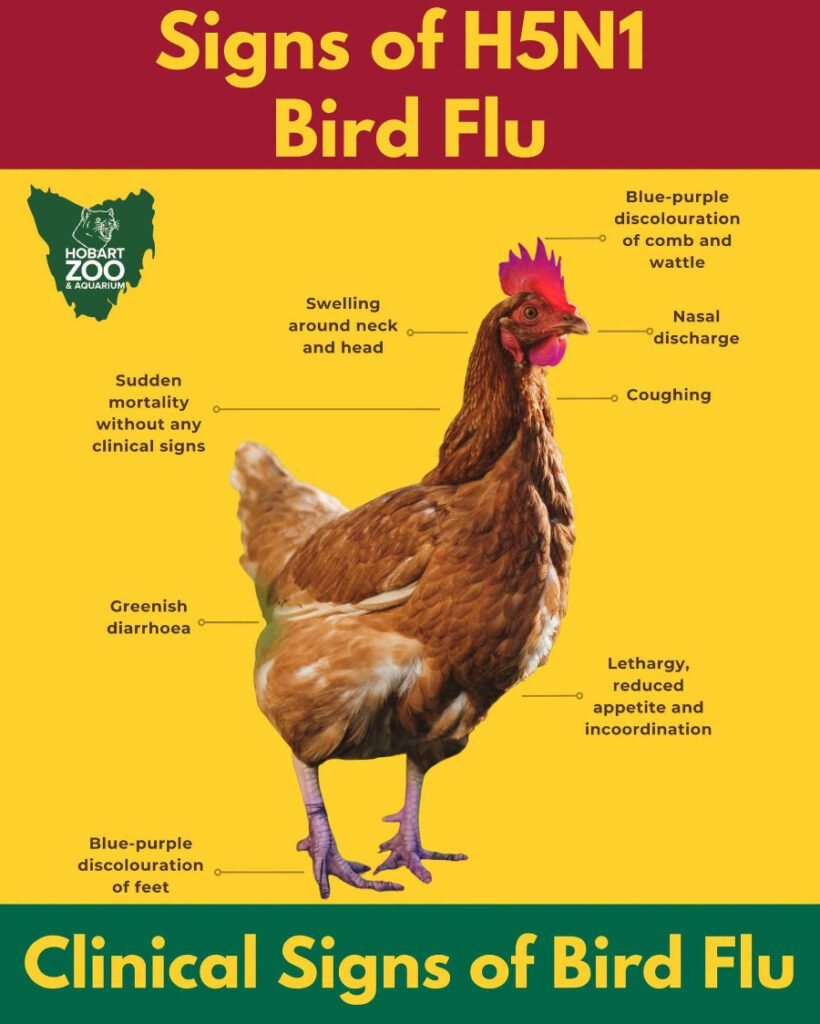
Signs of avian influenza in live birds include:
- breathing problems like coughing or sneezing
- circling
- tremors and incoordination
- twisted neck
- inability to stand or fly
- swelling in the head, neck and eyes
- change of colour or cloudiness in the eyes.
Signs in live mammals include tremors and incoordination, seizures, breathing problems, and runny nose and drooling.
What you should do
Do not touch sick or dead birds or other animals. Avian influenza or bird flu may affect humans however the current risk to the public remains low.
Any suspicion of an emergency animal disease (EAD) should be immediately reported to the 24-hour Emergency Animal Disease Hotline on 1800 675 888.
More information on how to spot and report bird flu and help prevent disease spread is at www.nre.tas.gov.au/BirdFlu
What bird owners should do
Commercial producers should have an on-farm biosecurity plan and know the signs of diseases that could affect their birds and other animals.
All poultry and bird owners are reminded to follow best biosecurity practices such as:
- keep poultry sheds, yards, aviaries and equipment clean; and restrict contact between poultry and wild birds.
Bird owners should also:
- ensure their footwear is clean
- always wash hands before and after handling birds or eggs; and
- quarantine new birds before integrating with existing ones.
More information is on the Chickens or Other Birds webpage.
What consumers should do
Consumers can be assured that eggs and chicken meat are safe to eat provided they are handled and cooked according to standard food handling practices.
What to expect in an outbreak
When bird flu is present:
- it could cause large numbers of bird and wild mammal deaths
- it could affect poultry (chicken and egg farms) and other industries
- activities like wildlife rescue, hunting, and muttonbird harvesting may need to pause
- there could be large numbers of dead animals visible in the community
- it may not be possible to remove all dead animals from an area
- some areas may be closed for varying amounts of time to prevent disease spread and eliminate risk to human health
- scavenging species such as the Tasmanian devil, wedge-tailed eagles, or quolls may become sick and die after eating infected birds
- H5 bird flu in wild animals cannot be treated so it’s important Tasmanians understand infected birds will likely die.
Human health
Human infections with avian influenza are rare and require direct and close contact with infected animals. People should avoid touching sick or dead birds or animals. If you must handle sick or dead birds, you can help protect yourself by wearing PPE which should include:
- a mask
- goggles
- gloves
- wash your hands thoroughly after handling any birds and equipment.
A bird flu incursion could see mass mortality events both of birds and, potentially, mammal species and is likely to cause significant community concern, particularly for those that work and volunteer with animals.
Support is available through:
- Access Mental Health 1800 332 388 – 24 hours a day, 7 days a week
- Head to Health Phone Service 1800 595 212 – 8.30am to 5pm weekdays (except public holidays).
- A Tasmanian Lifeline 1800 984 434 – 8am to 8pm, 7 days a week
- Lifeline 13 11 44
- visit the Tasmanian Department of Health website for more human health information.
For more information or to report a suspected case
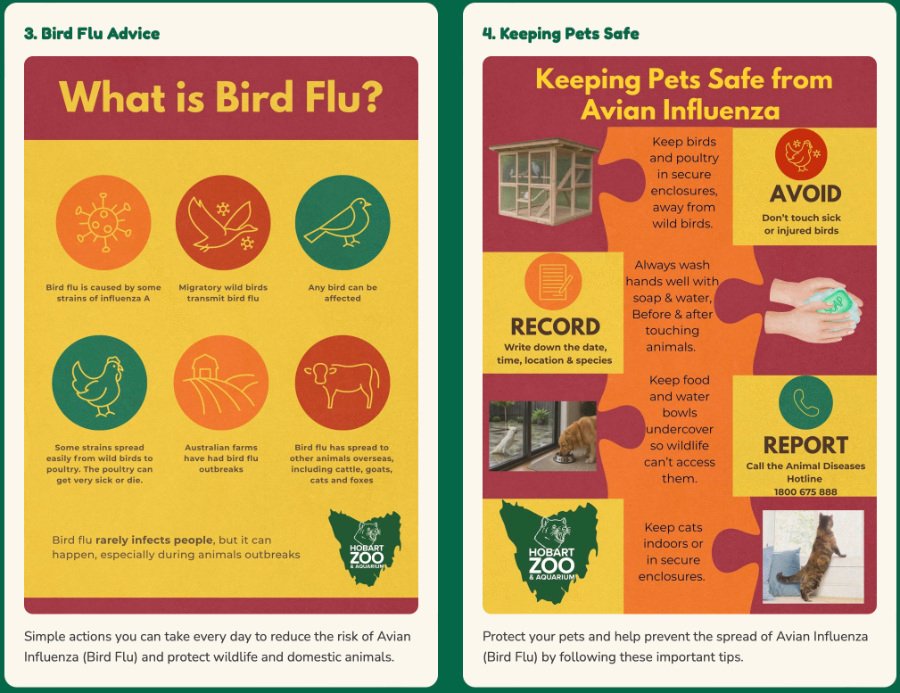
If you see sick or dead birds or animals:
- Avoid contact (do not touch, and keep pets away)
- Record what you see (photo, video, location, detail).
- report it as soon as possible to the Emergency Animal Disease Hotline 1800 675 888 (24/7), or through our online reporting forms.
How to make a report
- To report sick or dead birds or other animals:
- Call the Emergency Animal Disease Hotline 1800 675 888
- Make an online report using our online reporting forms: https://nre.tas.gov.au/biosecurity-tasmania/animal-biosecurity/animal-health/poultry-and-pigeons/bird-flu/report-sick-or-dead-birds

From Loretta:
The arrival of H5N1 bird flu in Tasmania can create emotional distress and trauma for wildlife carers, animal owners, and conservation communities worried about iconic species like Tasmanian devils and their own animals and birds.
Understanding the Impact
- Wildlife Stress: Potential mass mortality events in wild seabirds, seals, and scavenging mammals can deeply affect local communities and volunteers.
- Vulnerable Species: Heightened fears exist for localized or endangered populations like the Tasmanian devil, orange-bellied parrot, and raptors.
- Human Support: The emotional toll on those who work closely with vulnerable fauna is recognized by health authorities, with guidance accessible via local support networks.
What You Should Do
- Avoid Contact: Never touch sick, distressed, or dead wildlife.
- Record Details: Take photos or video, and note the exact location and number of affected animals.
- Report Immediately: Call the Emergency Animal Disease Hotline on 1800 675 888 or file a report through the NRE Tas Bird Flu Page.
I urge people to connect with their neighbours, friends, family and local communities. As a group we can support eachother emotionally and physically (buiding shelters etc) or even monetarily if you have the means. Stay calm, stay alert and stay healthy emotionally and physically.
If you are suffering trauma from this event or any other please reach out to one of several organisations.
Crisis and Immediate Helplines
- Lifeline: Call 13 11 14 for 24/7 crisis support and suicide prevention.
- Suicide Call Back Service: Call 1300 659 467 for free 24/7 phone and online counseling.
- A Tasmanian Lifeline: Call 1800 98 44 34 available daily from 8:00 am to 8:00 pm for psychosocial support.
- Beyond Blue: Call 1300 224 636 for 24/7 support regarding anxiety and depression.
Free Walk-In and Support Centres
- Medicare Mental Health Centres: Free walk-in support (no referral needed) available via Medicare Mental Health or by calling 1800 595 212 (weekdays 8:30 am to 5:00 pm). Regional locations include Hobart (Glenorchy), Launceston, Devonport, and Burnie.
- Safe Haven: Walk-in support for people experiencing situational or suicidal distress, open daily from 9:00 am to 10:00 pm.
Avian Influenza Learning Resources
Your first stop for trusted and reliable information aboutH% avian influenza from Hobart Zoo & Aquarium.
You can explore their curriculum aligned resources to help students understand the influenza, it’s impacts on wildlife and ecosystems and the role of biosecurity in protecting animals and the environment.
Graphics from Hobart Zoo & Aquarium