
Gardening in a time of crisis
Story by Russ Grayson, member of Permaculture Tasmania
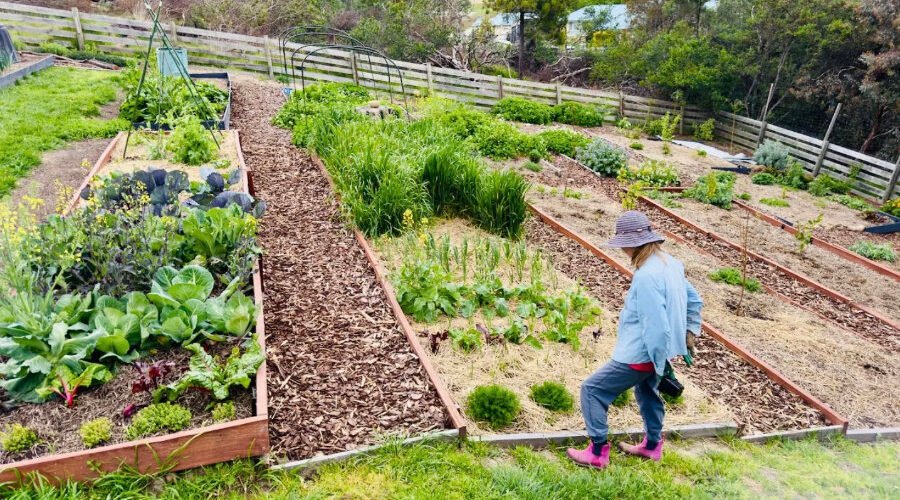
Feature photo: The home garden as a source of family food security in a time of crisis.
Let’s look at what we can plant in our gardens in a time of crisis. First, though, what is the current crisis we face?
What crises do — what happened?
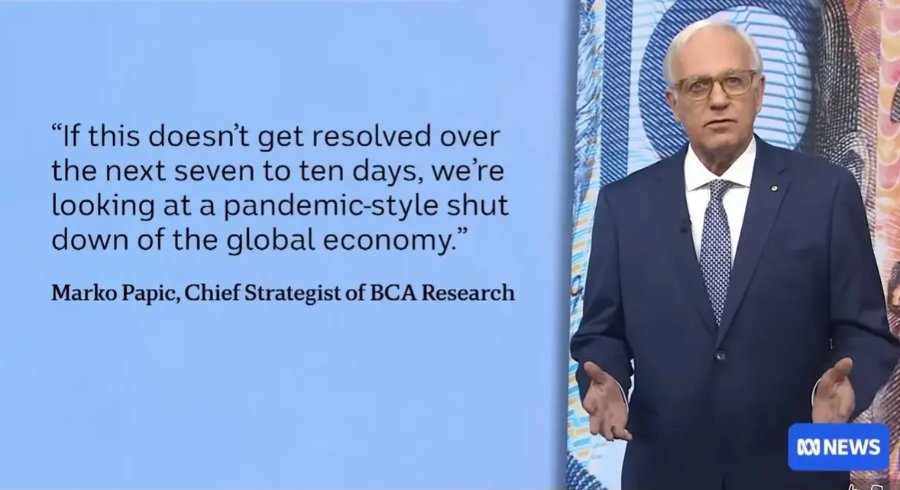
I’m writing this six weeks into the US/Israeli war in Iran. There is talk of a ceasefire but it is yet to happen. The crisis… it goes like this…
The US and Israel attack Iran > Iran retaliates by attacking US bases and oil refining capacity in neighbouring countries > the Iranians send missile barrages into Israel > refineries targeted by Iran in neighbouring countries are damaged and shut down > tankers cannot pass through the Strait of Hormuz > shipping is blocked > the oil supply to the rest of the world is restricted, twenty percent of the global oil flow locked up > petrol and diesel prices rise rapidly and dramatically around the world > fears of a shortage combined with escalating prices causes panic buying in Australia > service stations start to run out of fuel.
Iran has resorted to economic warfare. This is asymmetric war. Iran cannot defeat the combined military power of the US and Israel directly. But it can attack their economies. Iran’s actions in attacking the region’s refining capacity and blocking the Strait of Hormuz is intended to pressure oil-dependent nations to pressure the US and Israel to cease hostilities.
The US and Israel underestimated Iran’s capability to continue fighting. Previously conflicted by internal instability as people agitated for regime change, the attack brings a refocusing of Iranians on fighting the US and Israel. The attack and Iran’s response globalises the economic impact. Iran has turned the previously open Gulf seaway into a tollway. $2 million for ships to pass through, US and Israeli shipping excluded. At the time of writing it looks like Iran is considering allowing some ships passage. Not American or Israeli ships, though. Now, the US is moving ground forces into the region. There is speculation that they might try to seize some Iranian territory. The situation is as unstable as the US president is said to be.
Trump and Netanyahu have imposed a fuel crisis on Australia and the world. Why blame them when Iran has shown itself to be a belligerent power in the region and when it has killed thousands of its own people demonstrating in the streets against the regime? The reason: because it is the US that ended negotiations with Iran over its uranium enrichment and nuclear weapons program in favour of military action. Doing so was a deliberate choice. Now, the lack of a clear US political and military strategy is leaving the world with a fuel, fertiliser and helium crisis, an Iranian tollway for shipping passing through the Gulf, a reinvigorated Iranian leadership and the prospect of Iran rising to become a regional military power.
So where does this leave us here in Australia? We need oil fuels — petrol, diesel — to power our economies. Transport both private and commercial is being hit hard by the increasing price of oil fuels. Panic buying in Australia led to service stations running out of fuel although Australia’s oil fuel supply chains still operate. The vulnerability comes through Asian refineries. They supply Australia’s refined fuel supply. The refineries depend on Middle East crude oil for refining and shipment to Australia.
Gas from Middle East fields is critical to the production of nitrogenous fertiliser. Now, farmers face a fertiliser crisis and some are reported to be thinking of not planting their crop. In Tasmania, a report finds that farmers may not harvest the cauliflower and broccoli crop due to the price of fuel. Petrol and especially diesel fuels farm machinery and transports farm produce. By week six the threat to our food supply chains is becoming glaringly apparent at the same time as shops talk of imposing a surcharge of around five percent to pass on transportation costs imposed on them. A fuel crisis worsens a food affordability crisis already underway through cost of living pressures.
Oil and gas is critical to the production of a myriad of other products including plastics, and the helium used in semiconductor manufacturing, cryogenics, aerospace engineering, medical imaging (eg. MRI scanners), thermal management systems for batteries, chemicals and pharmaceuticals, fibre optics and more. Qatar, which supplies roughly one‑third of the world’s helium, halted production after Iranian strikes. The Strait of Hormuz, the only maritime exit for Qatari helium, is effectively closed to all but those paying the Iranian transit toll on shipping. Trump and Netanyahu’s war is creating a simultaneous production shutdown and logistics blockade, the worst‑case scenario for the global helium market, for farmers awaiting fertiliser and for people needing their vehicle for their work and transport. The situation is far worse than the fuel crises of the 1970s.
This is the situation at the time of writing. There is much uncertainty about the crisis. In war, the situation changes day by day, hour by hour. No one knows where it will lead. Because liquid oil fuels are core to food production on the farm and for food transportation, we are seeing food prices rise at the retail level. Increasing diesel, petrol and food prices are the enabling factors of the evolving crisis.
Background: a crisis rerun
We have been here before, during the oil crises of 1973–74 and the second in 1979–80:
- the crisis of October 1973 to March 1974 was triggered by the so-called Yom Kippur War between Israel and its neighbouring states; the subsequent OPEC oil embargo against the US and other nations supporting Israel saw oil prices quadruple, fuel shortages and rationing across the US, Europe and in Australia, and the beginning of widespread stagflation in economies; the OPEC embargo exposed the risk of Western dependence on Middle Eastern oil and marked the end of decades of cheap petroleum
- the 1979–1980 oil crisis was triggered by the Iranian Revolution; oil production and exports were disrupted, producing another sharp spike in global oil prices and renewed inflation and economic instability; it again reinforced the vulnerability of global energy markets to geopolitical upheaval.
How did we in Australia cope with these disruptions? With petrol rationing in South Australia and purchase limits imposed by service stations. With self-discipline, too. Citizens coped as best they could by adapting their behaviour. Being decades before the appearance of social media and the internet, there was no disinformation being spread, nor attacks on the government of the day for a crisis it had no hand in creating and that they were struggling to deal with. There was more political bipartisinship between the major parties, rather that using a national crisis for cheap political point scoring. We learned that geogrpaphic isolation offers no insulation at all from the impact of events a world away.
Background: dithering over a strategic, national fuel reserve
In mid-2023, the Australian government introduced the Minimum Stockholding Obligation under the Fuel Security Act 2021 as part of its fuel-security framework. The Act sets the legal requirement for fuel security and emergencies in Australia and can direct supply. It requires private fuel importers and refiners to keep minimum reserves of petrol, diesel and jet fuel in Australia. At the start of the crisis the government set up a National Fuel Supply Taskforce. As the scale of the impact started to become apparent, the government released 762 million litres from reserves.
Before the Minimum Stockholding Obligation took effect, in 2020 the then-Liberal/National Party federal government purchased and stored crude oil in the US Strategic Petroleum Reserve. By 2022, about 1.7 million barrels were reported as Australian‑owned and held in the US. That is equivalent to a little over three days’ national supply. That stock was sold during the handover of government to the Labor Party after the 2022 election. It was replaced by the Minimum Stockholding Obligation.
The Australian‑owned oil in the US would have taken a month or more to access and ship for refining and on to Australia. That limited its practical value in a crises. Geopolitical crises unfold rapidly.
The situation
Regarding our national food security, this was the situation by the end of March:
- the National Farmers’ Federation warned perishable food prices could rise 40–50 percent if diesel and fertiliser shortages persist
- farmers in WA, NSW and Queensland report diesel deliveries halted or delayed for weeks
- some farm operations have already stopped due to fuel shortages
- the disruption coincides with the winter planting season, meaning production losses are being locked in now, with food price impacts likely in coming months.
In late March, vegetable industry association AUSVEG issued a media release stating that:
- 27% of growers have reduced or paused planting
- 19% are not harvesting crops
- average planting cuts are around 30%
- shortages are hitting regions differently
- the cost of diesel, freight and fertiliser have surged.
Veggies may become fewer and more expensive, AUSVEG says.
In this evolving state of uncertainty, what can people do to secure their supply of basic foods?
Social media comment: I was thinking about how we should all stock up on chocolate this Easter because I’m pretty sure its price will go through the roof if this crisis continues. Around 70% of the world’s chocolate comes from West Africa, and without oil to transport it, it will soon become for the rich only. Globally our whole system feels like a house of cards.
What can we do?
Food security: the DIY solution
“History does not repeat itself. But it does rhyme.” Mark Twain said that.
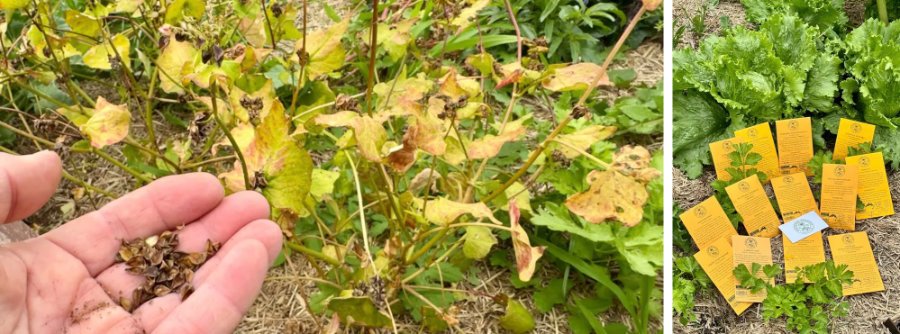
To see how true that is we need only look back to the Covid pandemic. Then, we saw a surge of interest in home food production. Non-hybrid vegetable seed suppliers in Australia were forced to ration purchases because they could not keep up with demand. People started to see how a home garden could supplement the food they bought. There was an upsurge in home growing of vegetables and other crops that was documented by the Australian food advocacy, Sustain.
Mark Twain’s rhyming history is becoming evident in our present fuel crisis. Do those fortunate enough to own a home with garden space look out their window and think about how all that space could be used to grow food rather than lawn?
Looking to a past crisis
Rhyming history again: a few social media commentators have suggested that in our present fuel and emerging food security crisis we need a modern version of Australia’s World War Two home gardening program. That was called Dig for Victory. Launched by Labor Party Prime Minister John Curtin in January 1942, the program was government supported. It encouraged Australians to grow their own vegetables and raise chooks. Its purpose was to boost food security. Its context was sustaining the population as a part of the war effort. Food security has always been an element in our national security, much like our liquid fuel supply. The good times we have been living through ignored that reality.
Nearly 50 girls from offices, shops, workrooms, and libraries enrolled last evening in a “Dig For Victory” Club which it is hoped will be the nucleus of a movement extending into many suburbs and country districts.
…14 June 1941, the Brisbane Courier Mail.
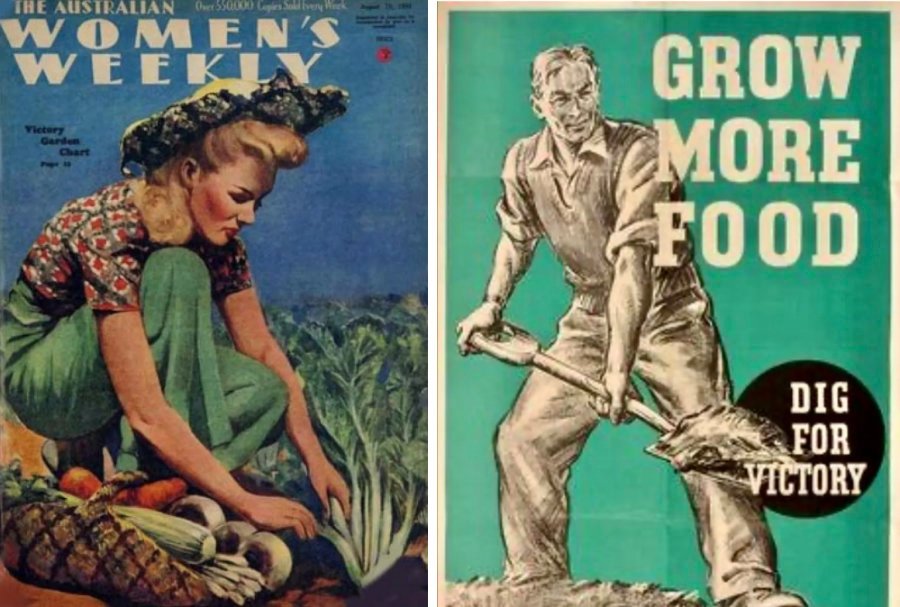
Other nations had equivalent ‘victory gardens’ programs. Download the US Victory Gardens Leaders Handbook here: https://www.greenprophet.com/wp-content/uploads/Victory-Garden-Handbook.pdf
We haven’t reached the stage of a new Dig for Victory campaign yet. That requires two things: a prolonged crisis spanning more than a year and government support.
Home-grown food in our emerging crisis
We can start our own dig for victory gardens. This time the victory is not an external enemy. It is an affordable and sustaining food supply in a fuel crisis.
Getting started in our crisis garden involves five stages:
- Designing and building the garden.
- Selecting vegetables and herbs that will grow in our climate, soils and environmental conditions.
- Planting according to the season… which vegetables grow in summer, autumn, winter and spring and when they are to be planted.
- Monitoring, maintaining and harvesting our vegetables, herbs and fruit.
- Preserving and storing our harvest.
In a crisis, we may not have access to fertiliser or bagged compost. Instead, we can produce our own sources:
- green manures composed of a legume for fixing the plant nutrient nitrogen in the soil-beans, lupins, chick pea; plants to add biomass, organic matter, to the soil-oats and other grains that are harvested before seed-set; these are planted between the vegetable cropping stages in a garden bed and well-fit a simple, five plant type crop rotation (legumes>leafy greens>fruiting plants such as tomato, capsicum>root crops such as potato)>green manure (repeat the sequence); at maturity the green manure is either turned into the soil or composted
- thick- mulching during the summer months to conserve water and add organic matter to the soil as the mulch degrades
- rainwater capture and efficient irrigation.
What do we plant?
So, what are the essential vegetable plants for our crisis garden, those that provide us with the nutrition that makes up a balanced diet? An adult human requires between 1600 and 3000 calories per day depending on their activity level.
We are interested in plants that offer high production in limited space. By limited space I mean making best use of the space in our home garden. By high production I mean plants that produce a lot of fruit, edible leafy matter or edible tubers. Unless you have a lot of space, exotic and low-productivity plants and those seldom eaten have no place in a crisis nutrition garden.
Calories from fats are crucial if shipping disruptions push up vegetable oil retail prices. Oils, such as olive, sunflower and grape oil are used in cooking.
We frame what we grow in terms of:
- energy foods — the carbohydrates
- body building foods — protein sources
- protective foods — sources of vitamins and minerals.
A note for Taswegians
In Tasmania’s cool temperate maritime climate, plant what Tasmania grows best:
- brassicas (net to exclude white cabbage butterfly)
- root crops, especially potatoes
- legumes — broad beans, beans ready to eat fresh, drying beans; peas
- hardy leafy greens and fruiting crops like silverbeet, spinach, French sorrel, capsicum, tomato, eggplant
- long‑keeping pumpkins.
Tasmania’s biggest threat isn’t heat, although summer dryness is a challenge. It is cold snaps and gales. We need to protect our crops from frost both early and late, and wind.
Use succession planting. Fast-maturing crops (lettuce, radish, Asian greens) fill gaps between slower-growing crops.
Prioritise storage crops. Fresh vegetables are for everyday eating. Stored food is security.
Crops for time of crisis
For cool‑temperate permaculture in southeast Australia and Tasmania, the crisis garden should focus on calorie‑dense roots, protein‑rich legumes and nutritious greens. Crop selection is made based on the season in which the crop will grow, eg. warm season crops, cool season crops.
Energy foods — the core calorie crops
These supply our bulk calories. They are starchy roots and long‑keeping fruiting crops.
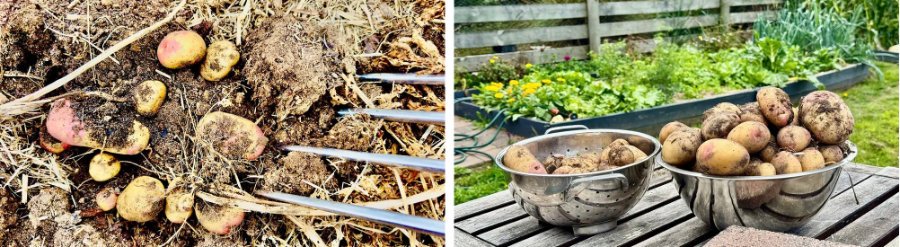
- potatoes are our main staple in season, producing a high yield per square metre; they are a source of carbohydrates, protein and vitamins
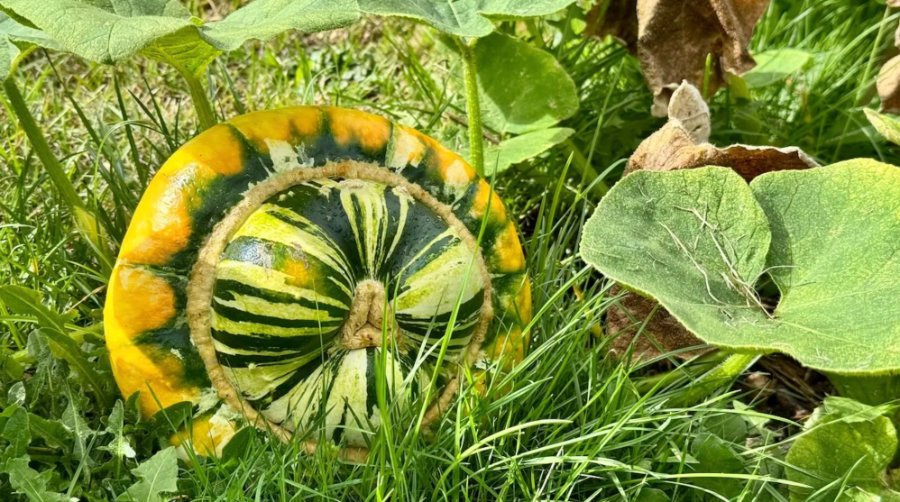
pumpkin, yielding dense calories and some protein; they store for months without refrigeration in a cool, shady place; the seed can be dried and is edible
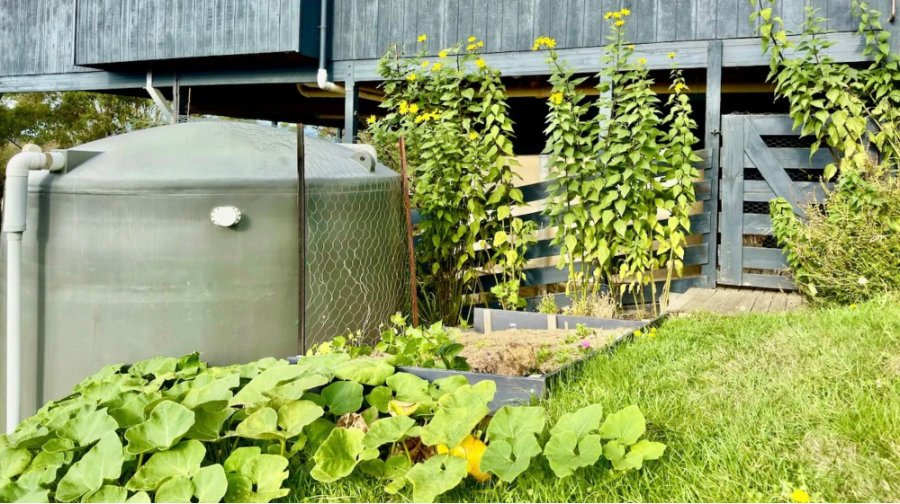
- sweet potatoes; grow them where the microclimate allows; the young leaf is edible
- parsnip, carrot, turnip; high yield, store well
- Jerusalem artichoke is our seasonal backup root staples that can grow in the odd corners of our garden; they are tolerant of different soils; Jerusalum artichoke, like potato, may best be stored in situ in the soil for a time, as they do not keep for long once harvested.
Body building foods — the protein staples
We look to the legumes, the pea and bean family, for our main source of protein. This is important for those following a meat-free diet.
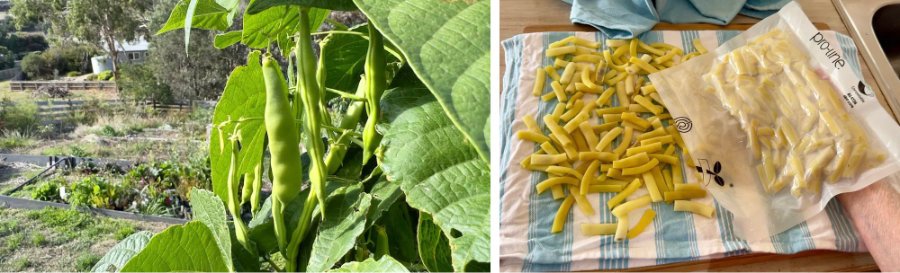
A crisis-time diet less reliant on bought meat and grain can find protein in two types of beans:
- varieties for drying and storing — climbing and bush beans such as kidney, borlotti, scarlett runner, navy etc; they provide protein and some calories
- varieties for eating fresh, for freezing and to dry for winter soups;
broad beans are hardy and prolific croppers in cool climates; they can be autumn‑sown in Tasmania for spring protein; their crop residue, the leaves and stalks, provide plenty of organic biomass for composting; chick pea are another leguminous addition to your home garden; soybeans, if you have a warm, sunny spot; high protein and fat content.
Legumes bring the added benefit of fixing the plant nutrient, nitrogen, in our garden soil.
Protective foods: sources of vitamins and minerals
These have fewer calories but plenty of vitamins and minerals to prevent nutritional deficiencies.
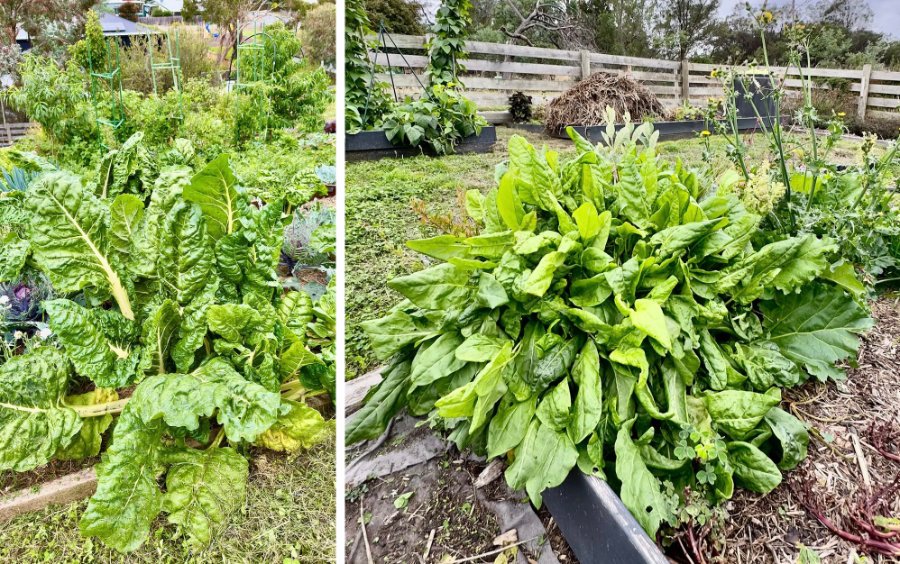
- broccoli and leafy greens like cabbages, kale and Asian greens provide a continuous leafy harvest rather than removing the entire plant at once; they are rich in vitamin C, K and minerals
- silverbeet, chards and spinach are very hardy; they are cut‑and‑come‑again greens most of the year; silverbeet has a long growing season and can produce a high yield of leafy greens
- squash like golden scallopini, a productive warm season squash
- carrots, beetroot, parsnips and turnips are a source of vitamins and fibre and offer long storage in the soil and out ot it
- the allium family, the onions, leeks, garlic and spring onions store well
- don’t forget the lettuce, tomatoes, eggplant and capsicum in their growing season.
Grain
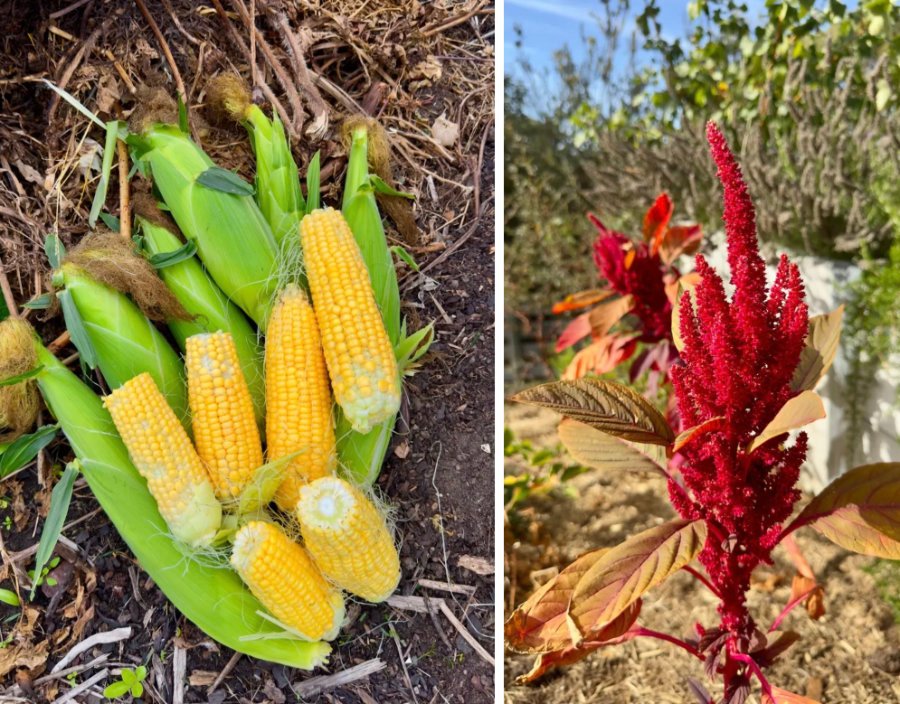
Corn is the easiest grain to grow at a backyard scale. Corn kernels are edible cooked and can be dried and stored.
There are two main types:
- sweet corn makes a tasty summer and early autumn crop; to keep, dry the kernels
- flour or dent corn is bred for drying; it can be made into tortillas or polenta.
Plant in blocks established a month apart for continuous harvest. Harvest when the tassels at the top of the cob turn brown. Grind for meal. The crop residue, the stems and leaves, go into the compost as bulk biomass.
Amaranth is another home garden grain.
Planning the home crisis garden
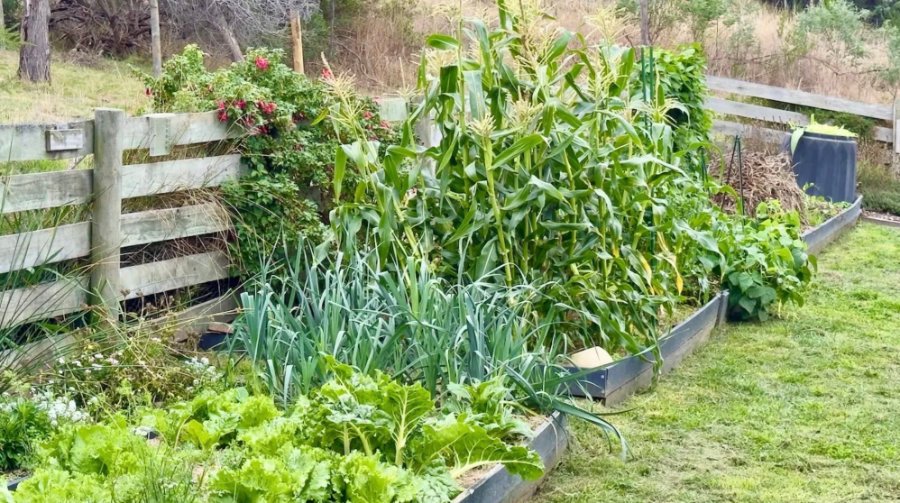
Here’s a simple framework for a Tasmanian/SE‑Australia food security crisis garden. What is planted varies with the season.
- about half the main beds planted to root crops like potatoes as well as pumpkins, squash and other starchy roots
- around a quarter planted to legumes; a mix of drying beans, peas, broad beans, chick pea, perhaps soy depending on the season
- the remaining quarter planted to seasonally continuous greens; fruiting crops in season such as tomato, eggplant, capsicum, zucchini, cucumber; the alliums (onion plant family) and herbs.
Grow 2–3 staggered plantings for continuous harvest through the growing season. Plant a batch early in the season and then another batch a month or so later. Repeat. If available, source early, mid and late season varieties.
Rotate different crop types through the beds to maintain soil fertility and to reduce the spread of soil-borne diseases. Follow legumes with leafy greens; leafy greens with fruiting crops (tomato, capsicum, eggplent etc); fruiting plants with root crops. Then repeat the cycle.
Store what you grow
Our options include drying, freezing and processing to preserve in jars. A solar drier might be an option in locations with plenty of sunshine and warmth. Otherwise, there are electric driers. Pickling requires the appropriate kit like the traditional Australian type made by Fowlers Vacola.
In mild, wet winters like much of coastal SE Australia and lowland Tasmania, many roots can be stored in the soil under a heavy mulch of straw to buffer temperatures. This works for parsnips, beetroot, swedes, turnips, Jerusalum artichoke, potato. Dig as needed. Protect from rats and bandicoots with mesh.
Out of the garden, the ideal conditions for most roots are around 0–5 °C, dark and dry. Potatoes cope with it a bit warmer, around 4–10 °C, and dark. Use hessian sacks or ventilated crates stacked in the coolest part of a shed or under the house and protected from light, rats and possums.
I’ve never seen this technique but I include here it anyway:
- Build a mound on well‑drained soil.
- Lay a thick bed of straw.
- Heap cleaned but unwashed roots or potatoes.
- Cover with more straw.
- Add 15–30cm of soil so the mound sheds rain.
Crisis‑focused ideas
Prioritise selection of varieties bred for storage like hard‑skinned pumpkins, potatoes, long‑keeping carrot and beets.
Avoid damage at harvest, as nicks introduce rot.
Spread your risk: some roots left in the bed under deep mulch, some in boxes indoors; pumpkin is best stored high and dry.
The biointensive method
We have experimented with John Jeavons’ biointensive gardening method(and here). It is an intensively-managed process that builds soil fertility and produces high yields in a small area, characteristically in less space than a comparable garden conventionally managed. It uses few inputs brought in from outside. This makes it suited to smaller urban home gardens and for use in community gardens.
Biointensive relies on deep soil preparation, dense planting, composting and a crop mix that both feeds people and builds soil fertility. The method’s characteristics are:
- deep bed preparation, usually by double-digging the soil
- close spacing in a hexagonal or triangular pattern to maximise the use of space
- a heavy reliance on compost and on-site fertility cycling
- open-pollinated seeds saved and reused
- a cropping plan that includes carbon crops and calorie crops
- a focus on using less water and fewer external resources while maintaining high yields.
Community solutions to a crisis
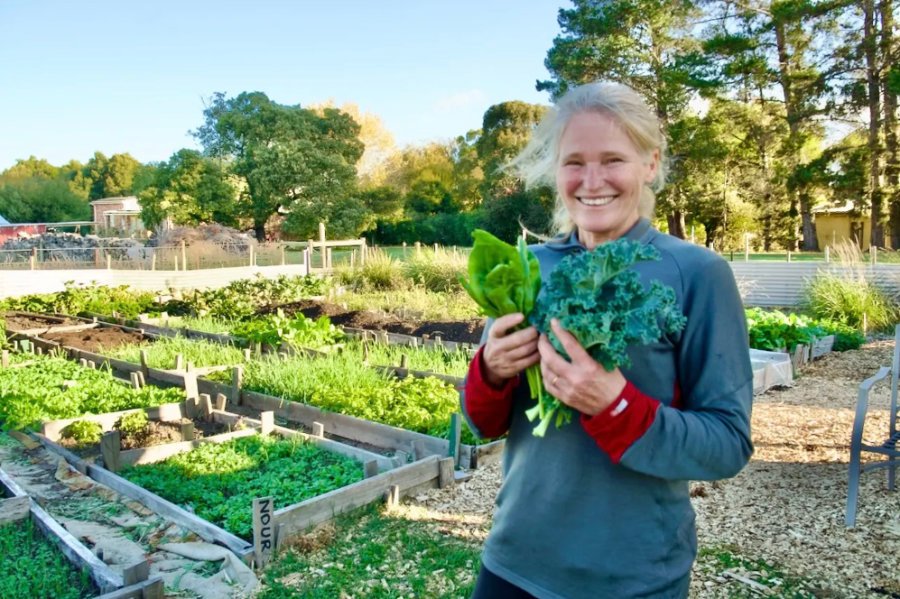
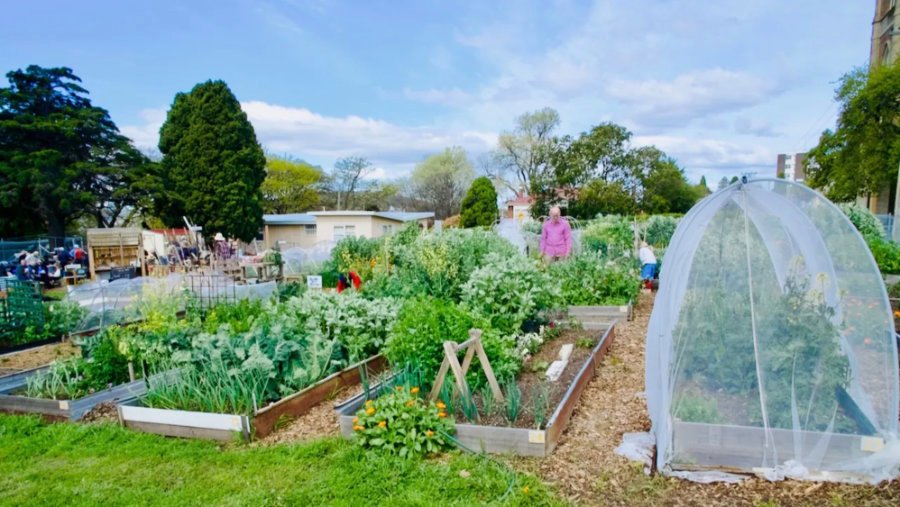
When I was one of the four who started Community Gardens Australia back in the 1990s, one of my motivations was that, were a food security crisis to eventuate, experienced community gardeners could go out to assist and train people starting new community gardens.
Community gardens have the potential to supply a limited volume of basic foods in a crisis. Limited, because the allotment sizes held by many individual community gardeners in Australia are generally too small to produce a wide range of foods in quantity. Gardens managed by share gardening rather than as individual allotments do have some potential to bulk-grow basic foods.
Community initiatives
We can take the initiative to improve our own food security through our home gardens and through bulk buying and food exchange.
A food co-operative in the Sydney eastern suburb of Randwick used a community building made freely available by the council as a depot to receive bulk orders of fresh vegetables, fruit and herbs purchased from the city’s organic produce market. There, individual orders were divided for collection in what was an example of community self-help. Food cooperertives have a history in Australia going back into the 1970s.
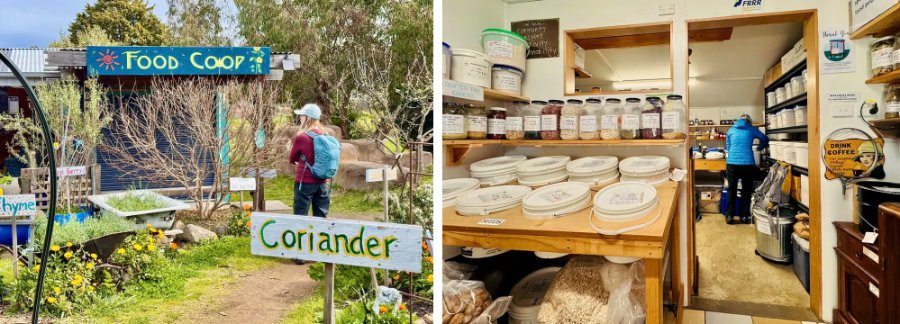
In the Tasmanian coastal town of Dodges Ferry, the community house (a community centre) maintains a community refrigerator where people in need of food assistance due to cost of living and other pressures can find free food. Contributions to the refrigerator come through a community association and donations from home growers and others.
Food swaps have been around for years. Weekly or so gatherings at a venue is the opportunity to swap excess home garden produce. The advantage of doing this lies in accessing foods individual gardeners do not grow.
The value of seed saving and exchange for family food security
Saving seeds from open‑pollinated, sometimes called ‘heritage varieties’ because they have been passed down through family lines keeps control of your plants and your garden in your hands. Saving, drying and swapping seeds avoids dependence on patented or hybrid seed. Think of it as seed and food sovereignty.
Seed saving and exchange are crucial in a crisis home food security garden because they maintain a local, low‑cost seed supply when commercial seeds are scarce or unaffordable. Sourced from the near region, open pollinated seed or vegetative planting material (cuttings) help us grow varieties that are already adapted to our soil, climate, plant disease and pest ocurrence.
Local seed‑saver groups engage in seed swaps to distribute seed varieties. This acts as a buffer against the loss of crops and varieties due to climate, weather, late frost, flood, fire or other events. Think of it as a community seed bank in the form of a distributed network of home growers in a region giving us access to seed.
Responding to crisis in war: the Ukrainian example
The Russian war in Ukraine provides us an example of how growers can respond to crises. Russia’s five year long war on Ukraine has seen Russians targeting seed infrastructure:
- in 2022 in Kharkiv, the Russians targeted a gene bank housing part of Ukraine’s national seed collection; the bombing destroyed tens of thousands of samples; the collection was said to be the 10th largest in the world and supplied seeds to breeders in many countries, including Russia
- the 2025 drone strike on seed potato supplier Agrico Ukraine.
Individual seed savers like Ivanka Bilous, a Ukrainian permaculture practitioner from the Bilous Family Homestead, fill gaps left by such losses and promote resilience through community seed distribution. Amid the ongoing invasion, Ivanka grew and shared non-hybrid, open-pollinated seeds to preserve three generations of family heritage. Fearing missile strikes could destroy her homestead and seeds, she distributed her seed so others can continue growing them and so that the seed varieties survive the Russian attacks and failed invasion.
Ivanka offered free seeds to anyone willing to plant them, ensuring genetic diversity survives even if her property is destroyed. Via volunteers, she also sent quantities of seedlings… 120,000 tomato, 130,000 cabbage, 100,000 cucumbers… to northern regions. Her intention was to support food security in war-affected areas. https://www.permacultureforrefugees.org/permaculture-in-ukraine/
International organisations back up Ukrainian heirloom and open-pollinated seeds by storing seed in other countries or supporting seed distribution networks to protect genetic diversity amid war risks.
- Crop Trust and Svalbard Global Seed Vault: After the 2022 bombing of Ukraine’s Kharkiv seed bank, the organisations helped to duplicate and store surviving Ukrainian heirloom samples in the Arctic seed vault in Norway, safeguarding varieties like wheat and vegetables from further destruction
- Seed Programs International partners with Ukrainian groups to distribute heirloom vegetable seeds; the organisation also supports school gardens in Poland hosting Ukrainian refugees, ensuring heirloom strains are grown and backed up across borders
- the World Food Programme is reported to have assisted homestead farming with seeds and training in frontline areas, indirectly backing up local heirloom cultivation through community replication https://www.wfp.org/stories/war-ukraine-how-wfp-helping-one-family-plant-seeds-wake-bombs.
MORE:
Ukrainian crisis seed distribution
https://www.permacultureforrefugees.org/permaculture-in-ukraine/
https://east-fruit.com/en/news/russian-strike-on-agrico-ukraine-an-attack-on-food-security-and-the-resilience-of-ukrainian-farmers
More on seed saving and community seed exchange:
https://seedsavers.net
The crisis
Whatever the outcome of the present war in Iran and the Gulf states, there is one realisation that it forces into our lives: our oil supply is a critical vulnerability to not only our nation and the entire world, but to how we live our lives.
Perhaps a solution will be found by the time this story goes live. Still, the war stands as a warning. We went through the 1973 oil crisis when OPEC wound back the oil supply to the West. The present fuel crisis and its blocking of the fertiliser needed by farmers is having a more intensive global impact. What do we learn for what may well be some future oil supply crises? And not only for nations. For backyard gardeners too. What solutions can we adopt to address global crises locally and at the same time build resilience — the capacity to bounce back after a setback — into our household and community food supply resilience?
Read more
Causes and responses
- Middle East conflict: The impact on Australia’s agriculture and economy
- Prelude to collapse: Australia’s oil fuels vulnerabilityAustralia’s Security leaders respond to the climate threat to our food system
- Australia’s Fuel Security Plan: Department of Climate Change, Energy, the Environment and Water — Australia’s fuel security (overview of MSO and programs).
- In War Zones, a Race to Save Key Seeds Needed to Feed the World
- Ted Trainer’s critique of our oil reliance
- Tasmania, and an unfolding oil crisis
- A fictional account depicts the despair felt by many
Solutions
- How does permaculture respond?
- The productivity of Australia’s backyard gardeners
- The food crisis: how do we respond?
The garden
- Tasmanian Kitchen Garden Calendar
- Peter Cundall’s year-round planting and sowing guide
- Growing a vegie garden in NW Tasmania
- Growing a Survival Garden with Staple Crops
- How to Grow and Store the 5 Crops You Need to Survive
- 7 Staple Survival Crops for Northern Gardens
- What are 5 essential food crops
- What survival food should you grow?
- Guide: 11 Highest Calorie Crops for Your Survival Garden
