
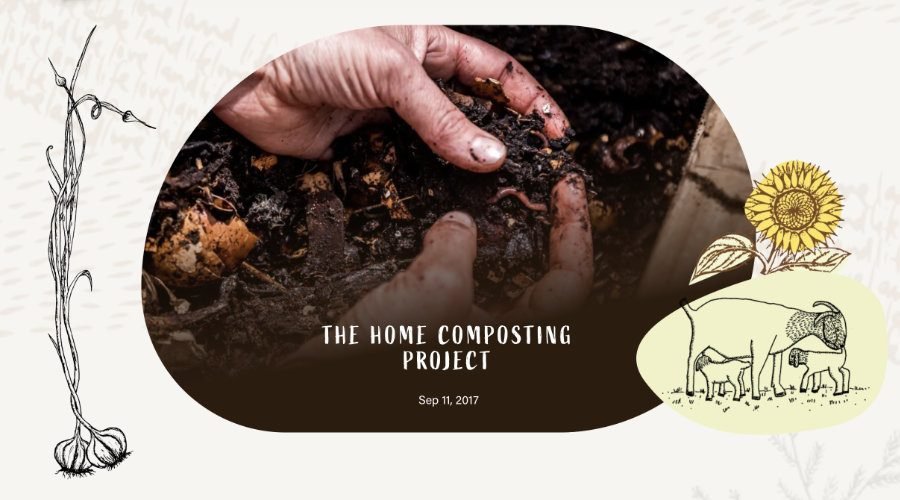
The Home Composting Project
Project by Hannah Moloney from Goodlife Permaculture, September 2017
The Home Composting Project was a multi-layered, creative education campaign that supported people to compost their food waste at home instead of sending it to landfill where it releases harmful methane gases into the atmosphere.
There were three layers to this project:
- The first was focused on “passive education” that happened through installing large-scale public artwork in the city educating people how to compost.
- The second layer was all about “active education” which took place through hosting two free home-composting workshops in Hobart.
- The third layer was advising the City of Hobart in updating their website to include information on how to compost food waste at home.
But why?
Current figures indicate that up to 47% of Hobart kerbside bins are pure food waste[1]– this is both a big environmental and economic problem and a big opportunity. Environmentally, the main problem is that once food waste is buried in the ground it becomes anaerobic, eventually releasing harmful methane gases into the atmosphere.
“Methane is a potent greenhouse gas 28 to 36 times more effective than CO2 at trapping heat in the atmosphere over a 100-year period.”
Hello climate change and a plethora of social, environmental and economic challenges. We think it’s best to avoid this at all costs, hence turning the problem (food waste) into the solution (healthy compost to return to the soil).
To do this we worked with a group of households to (a) teach them how to compost, and (b) record how much they composted over one month to determine its effectiveness in keeping food waste out of landfill. They each received identical “compost kits” that made accurate data collection possible.
