Permaculture Living in the Republic of the Marshall Islands
Story by Jo Dean
In September 2024, Geoff (my partner in Permaculture adventures) and I embarked on a 12 month assignment in R.M.I. in the North Pacific. RMI is a group of 29 atolls and 5 islands, approximately half-way between Australian and Hawaii.
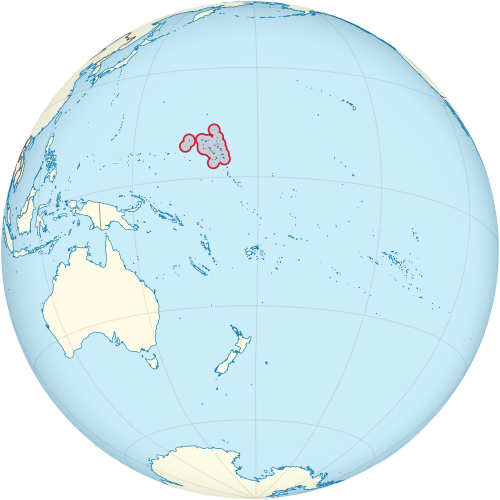
We had lived, worked and played in the South Pacific before for extended periods, but the constant heat and humidity ranging from 29 to 31 degrees C was a new experience for us, and a great learning experience to prioritise Permaculture living on a coral atoll, with a high point of 2 metres above sea-level, and the ocean and lagoon within walking distance in all settings. Climate change resilience is a lived experience everyday for everyone. As visitors to this place, learning from people who call RMI home was front and foremost in our minds. We listened closely to what people’s needs, hopes, dreams and aspirations were, and contemplated how to best bring our knowledge, skills and experience to build capacity in a respectful, caring way.
The ‘Farm to Fork’ program
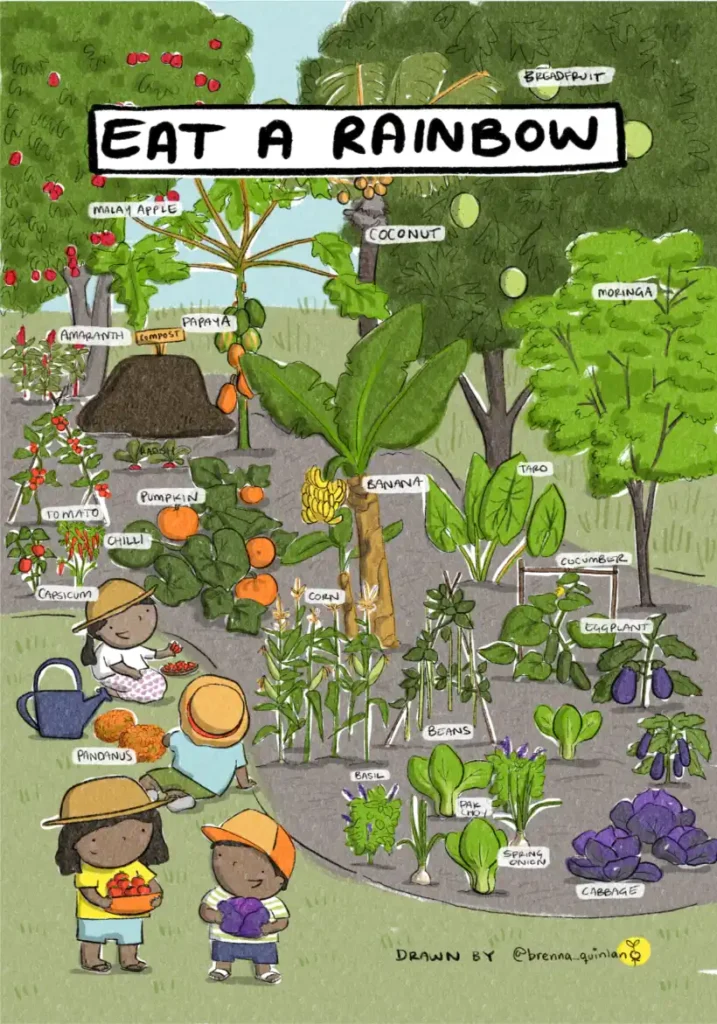
My role was to work with local NGO, Canvasback Wellness Centre, to implement a ‘Farm to Fork’ program in schools and community, by re-invigorating and establishing gardens as well as develop education resources specific for RMI for use in community and schools. Geoff worked with the Ministry of Natural Resources and Commerce, training staff on soil monitoring techniques and the intricacies of making compost.
The daily bike ride to and from the Wellness Centre to our tiny rental unit was an absolute gift to observe the daily cycles of life and the ebb and flow of a maritime culture. Most food consumed in RMI is imported (90%) and it also has a high incidence of Diet Related Non-Communicable Diseases (DR The NCD’S) such as diabetes, heart disease and stroke.
The beginnings… the cookbook
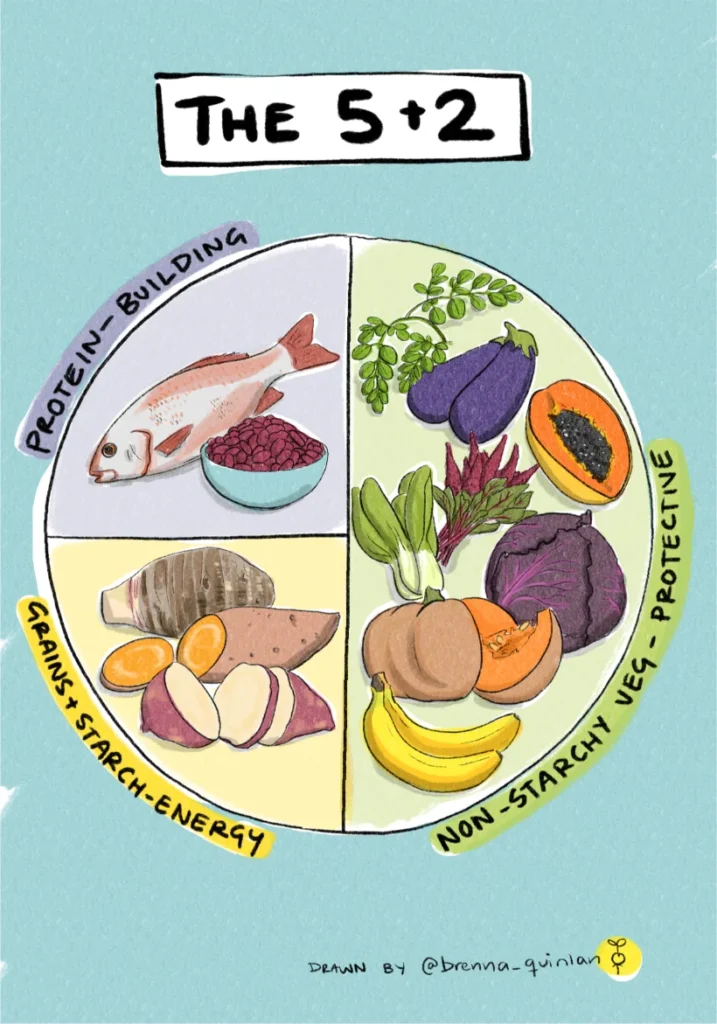
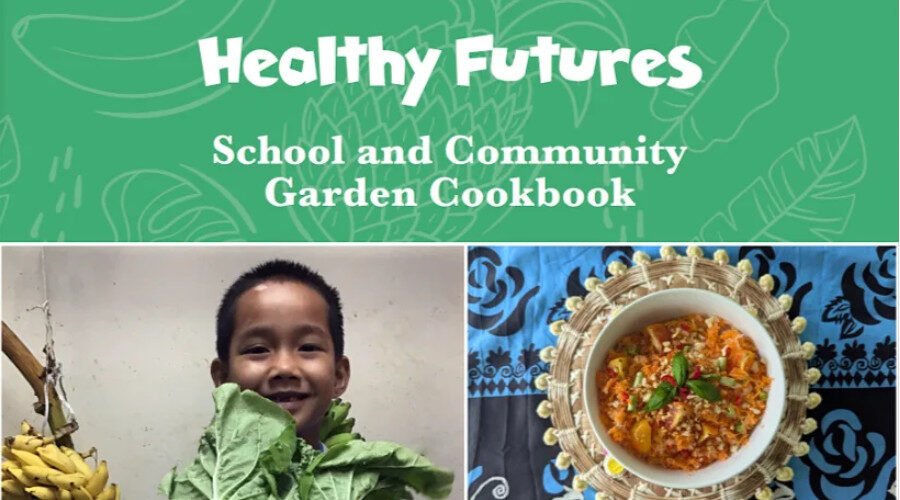
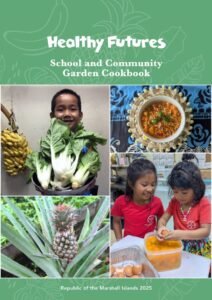
To help with moving forward positively, the Ministry of Education requested a cookbook of recipes utilising fruit and vegetables grown in the school gardens. Visiting and supporting 30 schools and communities provided a great opportunity to develop and gather recipes using locally grown ingredients and accessible stored items like dried pulses. The recipes were reviewed by a nutritionist, and with graphic design help by Terracircle – People Centred Development, became the ‘Healthy Futures School and Community Garden Cookbook-RMI‘
We are really thankful to TerraCircle for providing funding to print copies of the cookbook to distribute to schools on Majuro, Wotje, Jaluit and Ebeye in the Republic of Marshall Islands. A wonderful resource for teachers to use as a guide for cooking delicious dishes using wholesome produce picked fresh from the school garden, the most highly nutritious plants can be.
It is our hope that the recipes will be shared widely to reduce diabetes throughout the Pacific where these tropical food plants are being grown and enjoyed by families.
Terracircle also provided professional assistance with desktop publishing to create this beautiful booklet. We could not have created this stunning book without their extremely generous voluntary help.
Kommol tata
Jo Dean
School and Urban Garden Mentor
Australian Volunteer Program
Canvasback Wellness Centre – Majuro
 We are really thankful to